




Introduction
In the Hindu lunar calendar, Amavasya is the day of the new moon, when the moon disappears completely. Emotionally and spiritually charged and frequently linked with the rituals of one's ancestors and introspection, Amavasya Puja is celebrated with great respect throughout India. It is traditionally a day for remembering ancestors, prayer and quiet reflection.
What Is Amavasya?
The word "Amavasya" has been derived from Sanskrit. There, "Ama" means "together" and "Vasya" means "to dwell." It represents the day when the sun and the moon both stay in the same zodiac sign, due to which the moon becomes invisible.
Each lunar month has one Amavasya. It is the last day of Krishna Paksha (the waning fortnight), and Shukla Paksha (the waxing fortnight) begins the next day.
The Spiritual Significance of Amavasya Puja
On Amavasya, the energies surrounding us are said to be extremely high, both positive and negative. This is a perfect day for Amavasya Puja, wherein the devotees take blessings from their ancestors and give tarpan (ritual offerings of water and food).
Key Objectives of Amavasya Puja:
To pay respects to ancestors (Pitru)
To erase obstacles and karmic debts
To purify negative energies
To achieve spiritual peace
In places such as Tamil Nadu, Maharashtra, and Andhra Pradesh, Amavasya Puja is performed in temples and at home, frequently in the early morning hours.
What to Do on Amavasya: Rituals and Observances
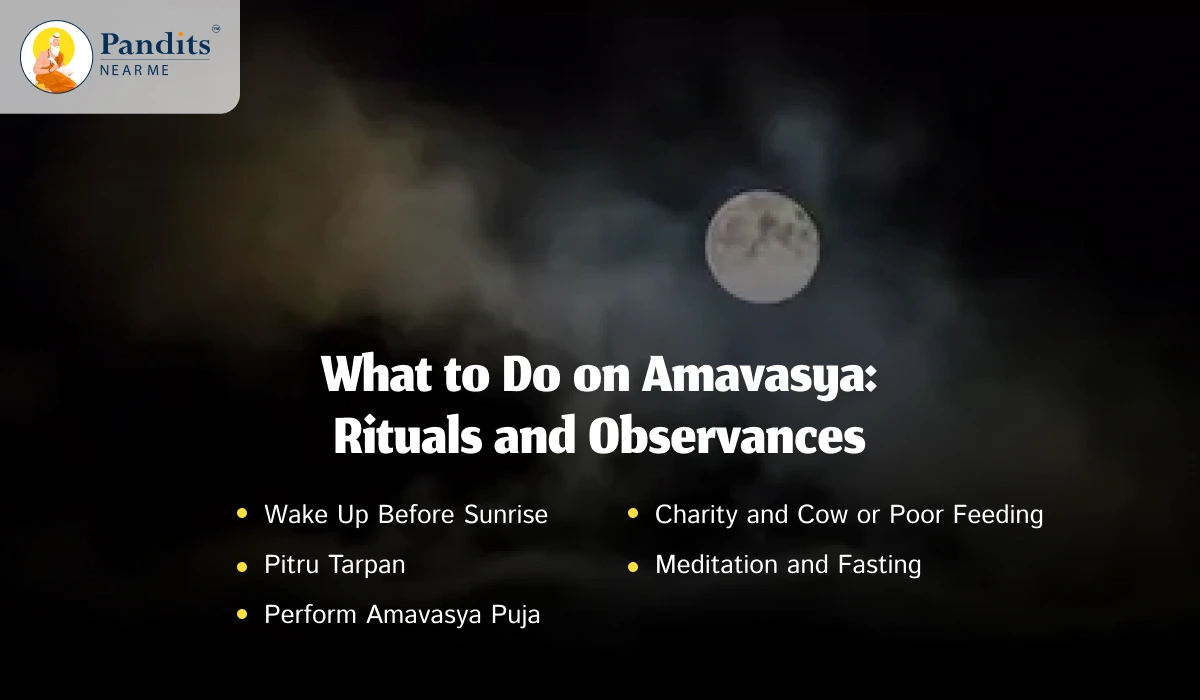
Customs vary by region and family, but a typical Amavasya day often includes:
1. Wake Up Before Sunrise
Begin the day early with a bath, ideally by a river, lake, or at home with holy water such as Ganga Jal.
2. Pitru Tarpan
Provide water, sesame seeds, and rice to the souls who have left. Recite Pitru mantras for invoking the blessings of ancestors.
3. Perform Amavasya Puja
Create a small altar with a lamp, incense, flowers, and a food offering. Pray to Lord Vishnu, Shiva, or your Ishta Devata and do a Shanti Puja for peace and protection.
4. Charity and Cow or Poor Feeding
Food donation, clothing donation, or donation of grains and feeding the cows or the poor are highly auspicious.
5. Meditation and Fasting
Many people keep fasts to purify the mind and body and meditate to gain spiritual wisdom.
Amavasya Dosh:
Some astrologers describe Amavasya Dosh when a person is born on Amavasya tithi, or when the Sun and Moon are together in the birth chart. It is a matter of astrological belief, and its reading depends on the full chart.
Remedies:
Do Amavasya Shanti Puja
Light sesame oil lamps near a Peepal tree
Offer tarpan (water and sesame) for ancestors
Recite "Om Namo Bhagavate Vasudevaya" 108 times
It is always recommended to consult a Vedic astrologer for individualized Amavasya Dosh remedies. Family conflict, low mood, money worries or delays in having a child have many real-life causes. Please speak to a doctor, counsellor or the right professional, alongside any spiritual practice.
Amavasya Shanti Puja
Amavasya Shanti Puja is traditionally performed by families seeking peace, especially those advised to do it after a birth-chart reading. Steps may vary by region and family.
Key Steps of Amavasya Shanti Puja:
Sankalp (intention setting) – State your intention to conduct the puja.
Invocation of Deities – Invocating Lord Shiva, ancestors, and planetary Gods.
Offerings (Naivedyam) – Offer food, incense, flowers, and water.
Havan or Homam – Fire ritual with sesame seeds, ghee, and specific mantras.
Prayers and Donations – Finish with prayers and distribute prasadam or donations.
This puja is usually performed at holy sites such as Kashi, Gaya, or Rameswaram, or with the help of an eligible priest.
Also read this article: What is Chandra Dosh? Meaning, Causes & Remedies
Polala Amavasya Pooja: A South Indian Tradition
Among different regional customs, Polala Amavasya Pooja, observed on Shravana Amavasya, is a prominent one in Andhra Pradesh, Telangana and parts of Karnataka.
Key Aspects of Polala Amavasya:
Committed to Goddess Poleramma
Women pray for their children's well-being
Ceremonies consist of rangoli drawing, sacred thread tying, and offering of special food items
Polala Amavasya Pooja is observed with reverence and is a significant example of local devotion to the Amavasya Puja.
Things Not to Do on Amavasya Day

There are certain things not to do on Amavasya day as per Hindu beliefs. Many families follow these customs:
Do Not Do the Following on Amavasya:
No New Beginnings – Do not conduct weddings, housewarming parties, or start new projects.
Avoid Cutting Hair or Nails – This is traditionally avoided on Amavasya.
Don't travel during the Night – Particularly to unfamiliar or wooded locations, as many families traditionally avoid it.
Avoid Non-Veg Foods or Drinking Liquor – It interferes with spiritual cleanliness.
Do Not Argue or Gossip – The day is meant for calm and reflection.
Is Amavasya a Good Day to Start Something New?
Traditionally, it is not. Amavasya in Hindu dharma is a good day for contemplation, worshiping the ancestors, and releasing things, but not for starting new things.
That said, there are exceptions in certain contexts:
Shani Amavasya (occurring on a Saturday) is a great day for doing protection rituals.
A few tantric traditions also regard Amavasya as an auspicious time to start spiritual activities.
For worldly undertakings, however, such as starting a business, marriage, or executing important papers, it is advisable to select an auspicious muhurat recommended by an astrologer.
Scientific and Astrological Perspective
Astronomically, Amavasya is when the Sun and Moon are on the same side of the Earth, which is why ocean tides are stronger around the new moon.
From an astrological perspective:
In astrology, the Moon is linked with the mind and emotions, so many people treat Amavasya as a quiet, inward day.
It is traditionally the main day each month for remembering ancestors (Pitru) through tarpan and charity.
Regional Variants of Amavasya
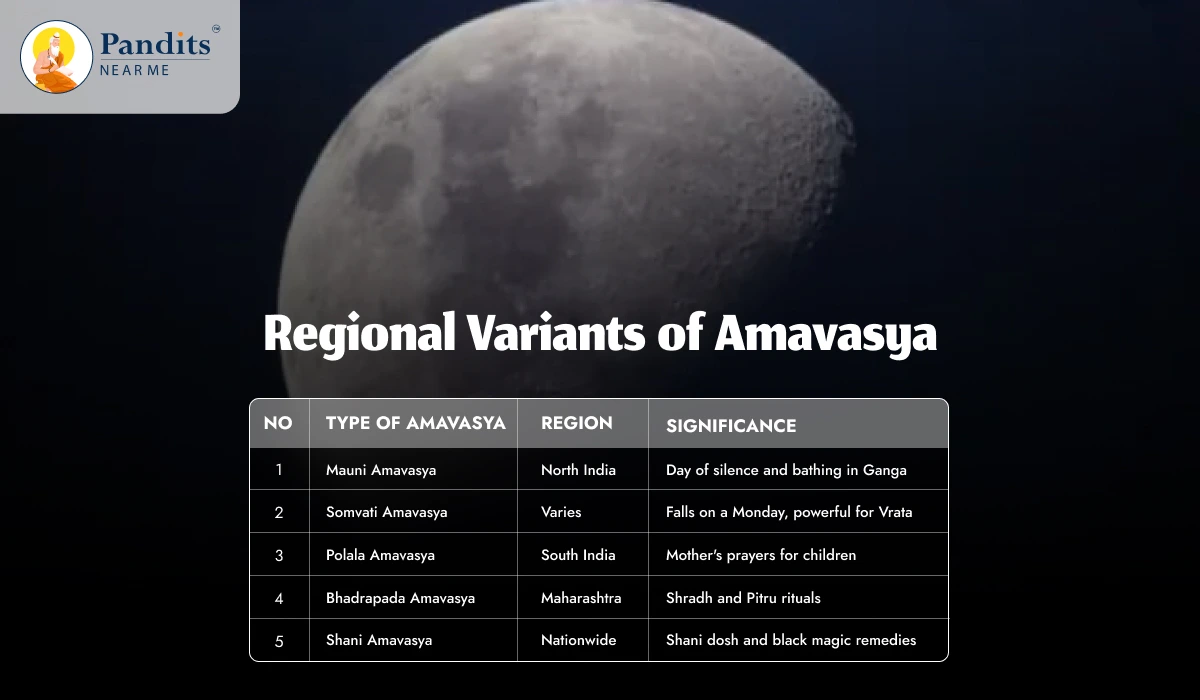
Here are some special Amavasya observances from across India:
| Type of Amavasya | Region | Significance |
| Mauni Amavasya | North India | Day of silence and bathing in Ganga |
| Somvati Amavasya | Varies | Falls on a Monday; traditionally a day for fasting and Peepal tree worship |
| Polala Amavasya | Andhra Pradesh, Telangana | Mother's prayers for children |
| Bhadrapada Amavasya | Maharashtra | Shradh and Pitru rituals |
| Shani Amavasya | Nationwide | Shani puja and Shani-related remedies |
Conclusion
Amavasya is not just a black moon phase but a highly spiritual period of purification, remembrance, and karmic healing. If you're doing Amavasya Puja, fasting, or finding a cure from Amavasya Dosha, it is a day traditionally set aside for prayer, charity and remembering ancestors.
Are you looking to perform Amavasya Puja, ancestral rituals, or dosh shanti remedies the correct way? You can book a pandit through Pandits Near Me for Amavasya puja, tarpan or shanti rituals at home or online.