




Sataisa (from “satais”, meaning 27) is a ceremony held about 27 days after a baby is born, when the Moon returns to the Nakshatra (birth star) the baby was born in. Sataisa is not one of the 27 Nakshatras. Families traditionally perform it, often together with Gand Mool Shanti, when a baby is born in one of the six Gand Mool Nakshatras. Customs vary by region and family.
What is Sataisa Nakshatra?
In Hindu astrology, a newborn’s birth star (Nakshatra) greatly influences their life. If the child is born under a Gand Mool Nakshatra, it is traditionally seen as a sensitive time, and many families perform a Nakshatra Shanti Puja.
Sataisa Puja is performed to reduce the negative effects of these birth stars and bring harmony to the child’s life. The term “Sataisa” also refers to the 27th-day ceremony after birth, which is directly linked to the baby’s Nakshatra.
Families perform it to seek blessings for the newborn.
What is Mool Nakshatra?
The Mool Nakshatra is the 19th star in Vedic astrology and is believed to carry a strong connection with ancestral karma. For a baby born in Mool, many families traditionally add Mool Nakshatra Shanti Puja to the Sataisa ceremony, praying for the baby’s health and happiness.
What is Gandmool?
Gand Mool is the name for six Nakshatras that sit where a water sign meets a fire sign: Ashlesha and Magha (Cancer–Leo), Jyeshtha and Mool (Scorpio–Sagittarius), and Revati and Ashwini (Pisces–Aries). These meeting points are called gandanta, meaning “knot”, and a birth here is traditionally seen as delicate. For this reason, many families perform a Nakshatra Shanti Puja.
Out of the 27 Nakshatras, six are considered Gand Mool:
Ashwini
Ashlesha
Magha
Jyeshtha
Moola
Revati
If a baby is born in any of these six Nakshatras, families traditionally consult a pandit about Mool Nakshatra Shanti or Gand Mool Nakshatra Puja.
Role of Nakshatra Shanti Puja
Nakshatra Shanti Puja is a Vedic ritual done to reduce the negative effects of a child’s birth star. For babies born in a Gand Mool Nakshatra, many families see it as an important step, praying for a smooth start in life.
Why is Sataisa Puja Important?
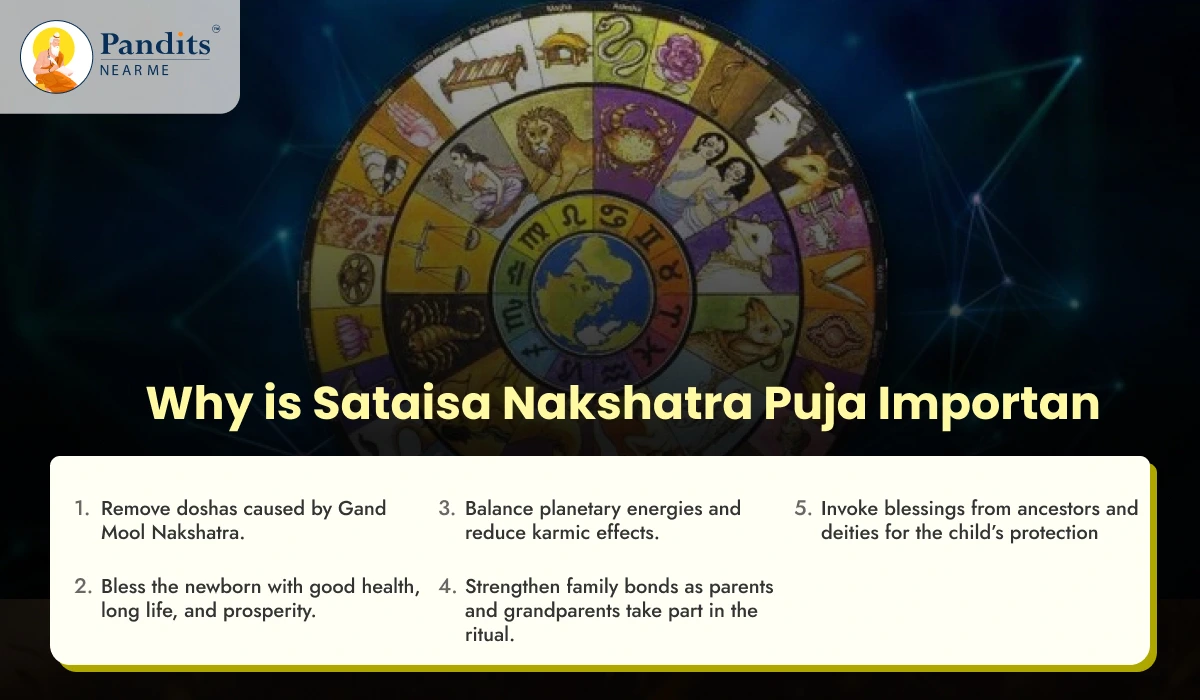
Performing the Sataisa Puja is believed to:
Remove doshas caused by Gand Mool Nakshatra.
Bless the newborn with good health, long life, and prosperity.
Balance planetary energies and reduce karmic effects.
Strengthen family bonds as parents and grandparents take part in the ritual.
Invoke blessings from ancestors and deities for the child’s protection.
When Should You Perform Sataisa Puja?
On the 27th day after the baby’s birth.
On the same Nakshatra day under which the child was born if the 27th day doesn’t match.
In some traditions, for babies born under Gand Mool Nakshatra, the puja is done when that Nakshatra repeats after birth.
The exact muhurat and timing are usually decided by an astrologer or family priest.
Sataisa Puja Samagri List (English and Hindi)
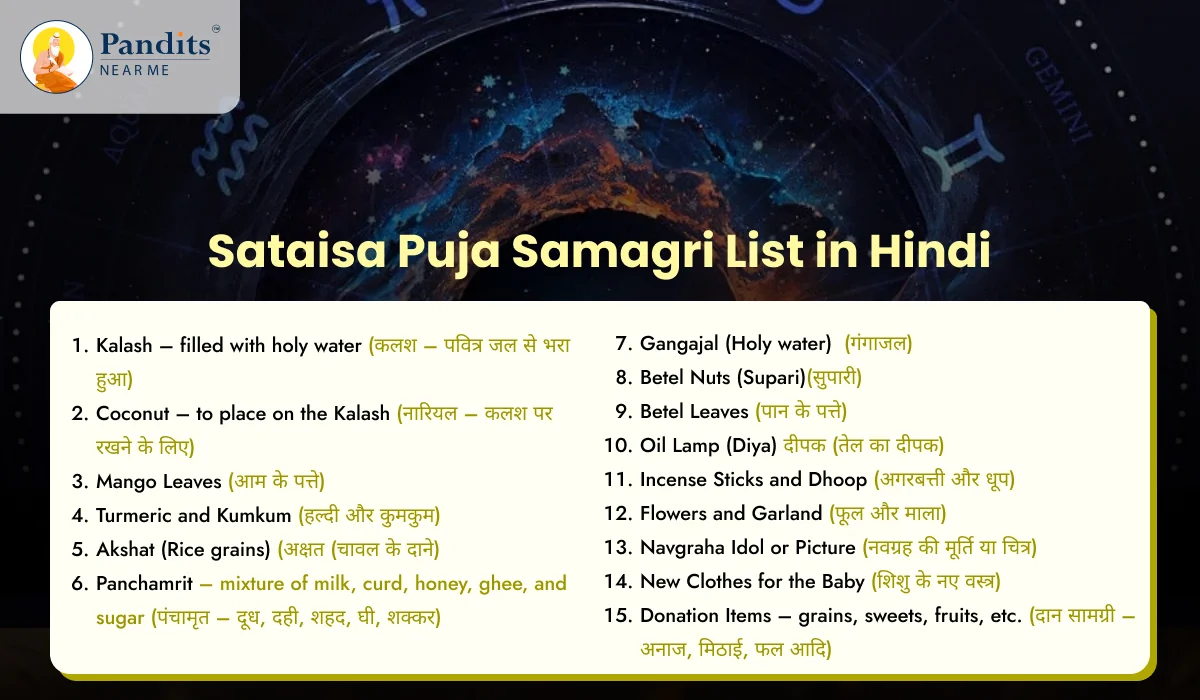
Kalash – filled with holy water (कलश – पवित्र जल से भरा हुआ)
Coconut – to place on the Kalash (नारियल – कलश पर रखने के लिए)
Mango Leaves (आम के पत्ते)
Turmeric and Kumkum (हल्दी और कुमकुम)
Akshat – rice grains (अक्षत – चावल के दाने)
Panchamrit – mixture of milk, curd, honey, ghee, and sugar (पंचामृत – दूध, दही, शहद, घी, शक्कर)
Gangajal (Holy water) (गंगाजल)
Betel Nuts (Supari)(सुपारी)
Betel Leaves (पान के पत्ते)
Oil Lamp (Diya) दीपक (तेल का दीपक)
Incense Sticks and Dhoop (अगरबत्ती और धूप)
Flowers and Garland (फूल और माला)
Navgraha Idol or Picture (नवग्रह की मूर्ति या चित्र)
New Clothes for the Baby (शिशु के नए वस्त्र)
Donation Items – grains, sweets, fruits, etc. (दान सामग्री – अनाज, मिठाई, फल आदि)
How to Perform Sataisa Puja?
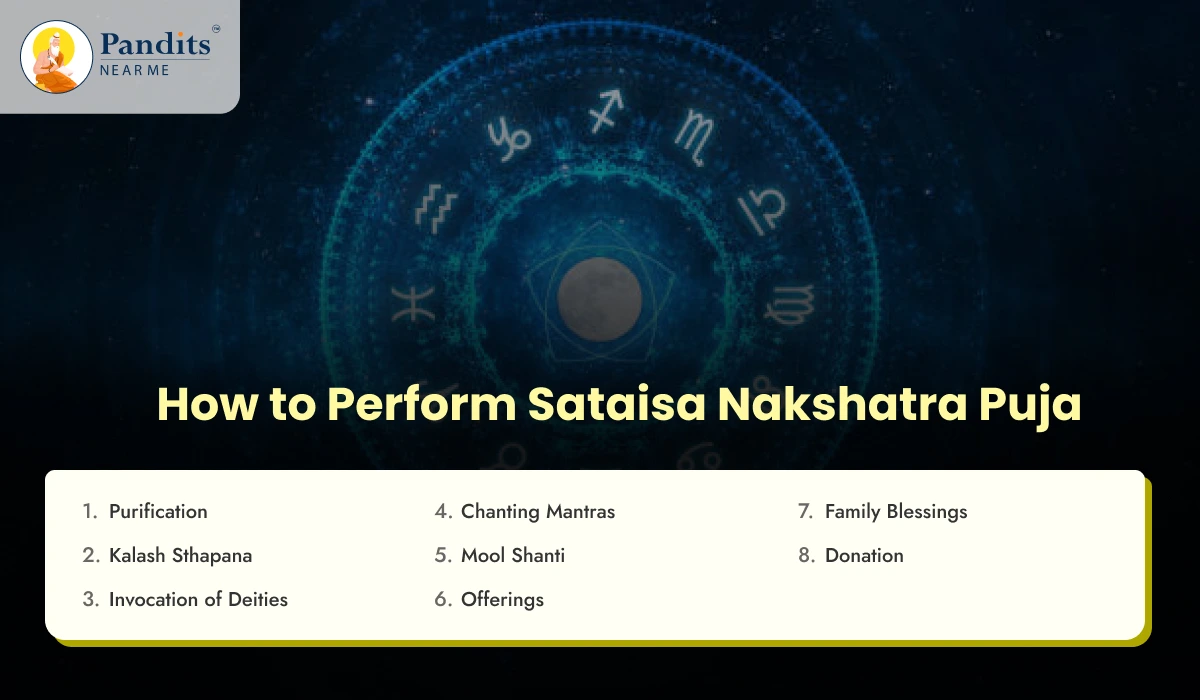
Purification: Clean the puja area and sprinkle Gangajal to purify the surroundings.
Kalash Sthapana: Place a Kalash filled with holy water, topped with a coconut and mango leaves as a symbol of prosperity.
Invocation of Deities: Begin the puja by invoking Lord Ganesha to remove obstacles and worship the Navgrahas to balance planetary energies.
Chanting Mantras: Recite mantras specific to the child’s Nakshatra along with prayers to the family deity.
Mool Shanti: If the baby is born under a Gand Mool Nakshatra, the pandit also performs Mool Nakshatra Shanti Puja..
Offerings: Present flowers, fruits, sweets, and light a diya as part of the offerings.
Family Blessings: Parents and grandparents bless the child using rice grains mixed with turmeric.
Donation: Donate food, clothes, or grains to Brahmins and the needy to complete the ritual.
Mantras and Chants Used in Sataisa Puja
The mantras recited during the Sataisa Puja are believed to remove negative influences and invite divine blessings for the newborn.
1. Ganesh Invocation
ॐ गं गणपतये नमः
Om Gam Ganapataye Namah
Recited at the start, praying that the puja goes smoothly.
2. Nakshatra Shanti Mantra
ॐ अश्विनी अश्लेषा मघा ज्येष्ठा मूल रेवती नक्षत्रेभ्यः शान्तिं कुरु कुरु स्वाहा।
Om Ashwini Ashlesha Magha Jyeshtha Moola Revati Nakshatrebhyaḥ Shantim Kuru Kuru Swaha
Chanted to pacify the Gand Mool Nakshatras and bring balance to the child’s life.
3. Mool Nakshatra Mantra
ॐ मूलाय नमः
Om Moolaya Namah
Recited if the baby is born in Mool Nakshatra, praying for the baby’s well-being.
4. Navgraha Mantra
ॐ आदित्याय च सोमाय मङ्गलाय बुधाय च। गुरु शुक्र शनिभ्यश्च राहवे केतवे नमः॥
Om Adityaya Cha Somaya Mangalaya Budhaya Cha, Guru Shukra Shanibhyashcha Rahave Ketave Namah
Invoked to balance the planetary energies and seek protection from all nine celestial bodies.
Regional Traditions of Sataisa Puja
North India: Sataisa is performed on the 27th day with detailed rituals and blessings from family elders.
South India: The ceremony is often combined with the Namakaran (naming ceremony).
Bihar & Uttar Pradesh: Many families merge Sataisa Puja with Chhathi Puja for combined blessings.
Conclusion
For most families, Sataisa is a way to welcome the baby with prayers on the day the birth Nakshatra returns. By performing Mool Nakshatra Shanti or Gand Mool Nakshatra Puja, families traditionally add Gand Mool Shanti when the baby is born in one of the six Gand Mool Nakshatras.
How can Pandits Near Me help with Sataisa Puja?
At Pandits Near Me, we connect you with experienced Vedic priests to perform Sataisa Puja, Mool Nakshatra Shanti, and Gand Mool Nakshatra Puja.
Expert Pandits for accurate rituals
Complete Puja Samagri support
Online & in-person booking options
If you would like a pandit for Sataisa or Gand Mool Shanti, you can book one through Pandits Near Me.