


Panchopchar Puja (also written Panchopachara Puja) is the simplest form of Hindu worship, in which five offerings are made to a deity: sandalwood paste, flowers, incense, a lamp and food. It is widely done at home as part of daily worship and can be completed in a few minutes. This guide explains the meaning of the five offerings, the step-by-step vidhi, the short lines traditionally recited with each offering, and how Panchopchar Puja relates to Panch Dev Puja.
Introduction
The Panchopchar Puja is a basic and supremely respected method of worship in Hindu culture. This pious ritual, or panchopachara pooja, involves presenting five basic items to the God, which represent the devotee’s dedication and devotion. It forms a key part of the panch dev puja and is mainly practiced in temples and households to seek the blessings of the divine.
In this blog, we will learn about the panchopchar puja vidhi, its importance, the materials needed, and the effective panchopchar puja mantra that enhances the ritual's spiritual power. We will also discover the significance of panchmeru pooja and pachvi pujan in Hindu rituals.
Meaning and Origin
Originating from the Sanskrit language, the word Panchopchar combines 'Panch' (five) and 'Upachar' (an offering or act of service to the deity). This ritual is done by offering five sacred items to the deity, which include the following:
Gandha: This is usually sandalwood paste (chandan), sometimes with kumkum. It symbolizes purity and positivity.
Pushpa: The second offering includes fresh flowers, which represent devotion and surrendering to the divine.
Dhoop: It symbolizes the removal of negative energies and cleansing of the atmosphere.
Deep: The fourth offering, as an oil lamp, signifies enlightenment, knowledge, and removing darkness.
Naivedya: This includes sweet or fruit offered with devotion and gratitude.
Panchopchar is the shortest of the traditional forms of puja. The main worship is conducted with 5, 10, 16 or 18 articles, and the 16-offering form is called Shodashopachara Puja.
Procedure
1. Purification
Before beginning the ritual, it is essential to cleanse the puja area and purify oneself by taking a bath. After that, one should light a ghee lamp and offer prayers to Lord Ganesha to remove obstacles.
2. Invocation of the Deity
The devotees should then invoke the deity by chanting the respective panchopchar puja mantra and seeking their divine presence.
3. Offering Gandha
After invoking the deities, one should apply sandalwood paste or sprinkle perfume near the deity’s idol or image.
4. Offering Pushpa
This includes offering fresh flowers to God while reciting their name and showing your devotion.
5. Lighting Dhoop
Next, light incense sticks and wave them in a circular motion to purify the surroundings.
6. Illuminating the Diyas
This step involves lighting an oil lamp and offering it to the deity while chanting prayers for guidance and enlightenment.
7. Presenting Naivedya
As a symbol of gratitude, offer sweets, fruits, or any satvik food before the deity
8. Aarti & Distribution of prasad
The final step includes performing an aarti with a camphor lamp, seeking blessings, and distributing prasad among family members.
Importance and Benefits
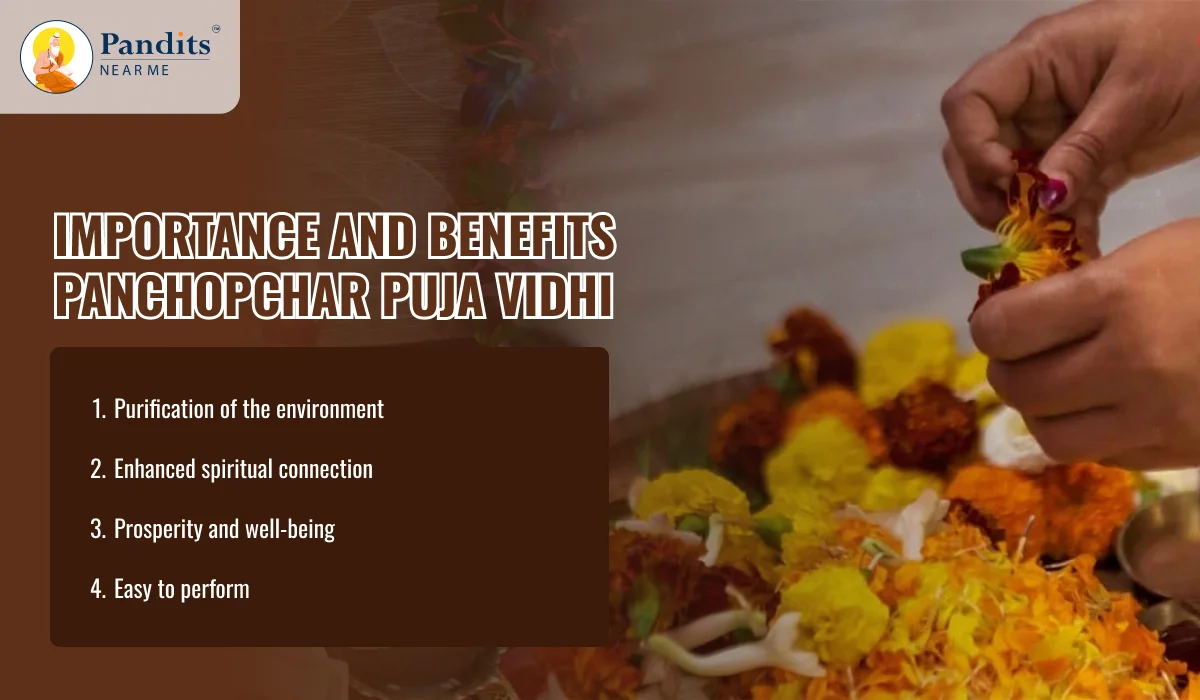
Families value the Panchopchar Puja vidhi for a few simple reasons:
- A daily act of devotion: the five offerings are a way to remember and honour the deity every day.
- A calm start or end to the day: the lamp, incense and prayer create a quiet, focused space at home.
- Blessings, as believed: devotees traditionally believe regular puja brings peace and harmony to the home.
- Easy to perform: it needs only five items and a few minutes, so anyone in the family can do it.
Panchopchar Puja Mantra
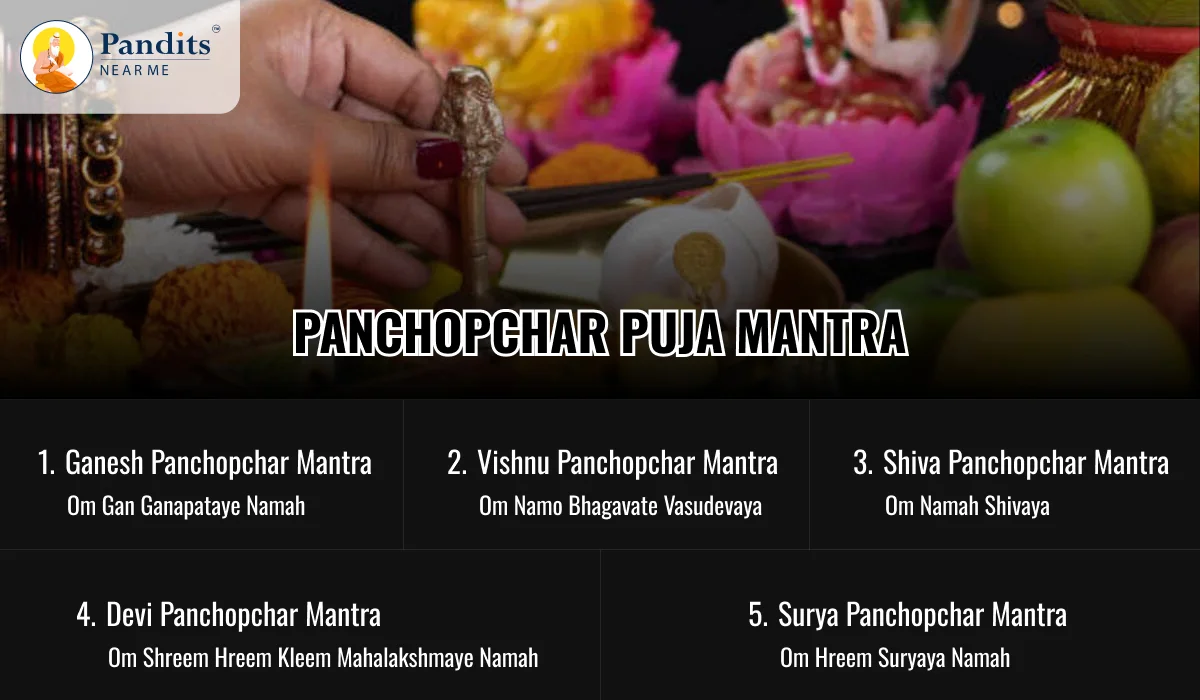
In Panchopchar Puja, each offering is made with a short line that names the deity and the offering. A common form is:
Ganesh Panchopchar Mantra
Om Gan Ganapataye Namah
Vishnu Panchopchar Mantra
Om Namo Bhagavate Vasudevaya
Shiva Panchopchar Mantra
Om Namah Shivaya
Devi Panchopchar Mantra
Om Shreem Hreem Kleem Mahalakshmaye Namah
Surya Panchopchar Mantra
Om Hreem Suryaya Namah
Panch Dev Puja and Its Relevance
The Panch Dev Puja is an important Hindu puja in which five major deities are worshiped, each symbolizing an important function of the universe.
- Lord Ganesha, the remover of all obstacles, is worshiped first to make the ritual smooth and successful.
- Lord Vishnu, the preserver of the universe, represents protection and nourishment.
- Lord Shiva, the destroyer of evil, symbolizes change and inner power.
- Goddess Durga, the personification of strength and bravery, is revered for protection and divine power.
- Finally, Lord Surya, the supreme source of energy and light, is revered for his contribution to the sustenance of life and for granting wisdom.
Panch Dev Puja is traditionally done with the five Panchopchar offerings made to each of these deities in turn.
Conclusion
Panchopchar Puja shows that worship doesn't need to be elaborate: five simple offerings, made with devotion, are at the heart of daily Hindu prayer. For a fuller daily routine, see our simple puja vidhi for daily worship at home. If you'd like a pandit for a larger puja or a festival, you can book one through Pandits Near Me.
Rituals are an important part of Hindu culture, and professional pandits play an important role in the smooth conduct of the ceremony. Are you looking to hire experienced pandits online for your auspicious ceremony? Pandits Near Me is your answer, We have professional pandits well-versed in a variety of Hindu rituals in budget at your desired place. So, visit panditsnearme.com today and book your pandit today!