




Many Hindu families begin the day with a short puja at home: lighting a lamp, offering flowers and saying a prayer. This guide covers what to keep ready, a simple 8-step method, and short mantras you can use, even if you are new to it.
Why is Daily Pujan Important?
Daily pujan is not just about offering flowers or lighting a lamp—it’s a way of showing gratitude and inviting divine blessings into your life. When you perform even a simple pooja vidhi every day, you:
Purify your mind and home environment.
Improve concentration and focus.
Feel calmer and more focused.
Strengthen faith and spiritual connection.
Keep children and family connected to cultural roots.
Even five minutes of sincere prayer can set a calm tone for the day.
Preparing for Daily Pujan
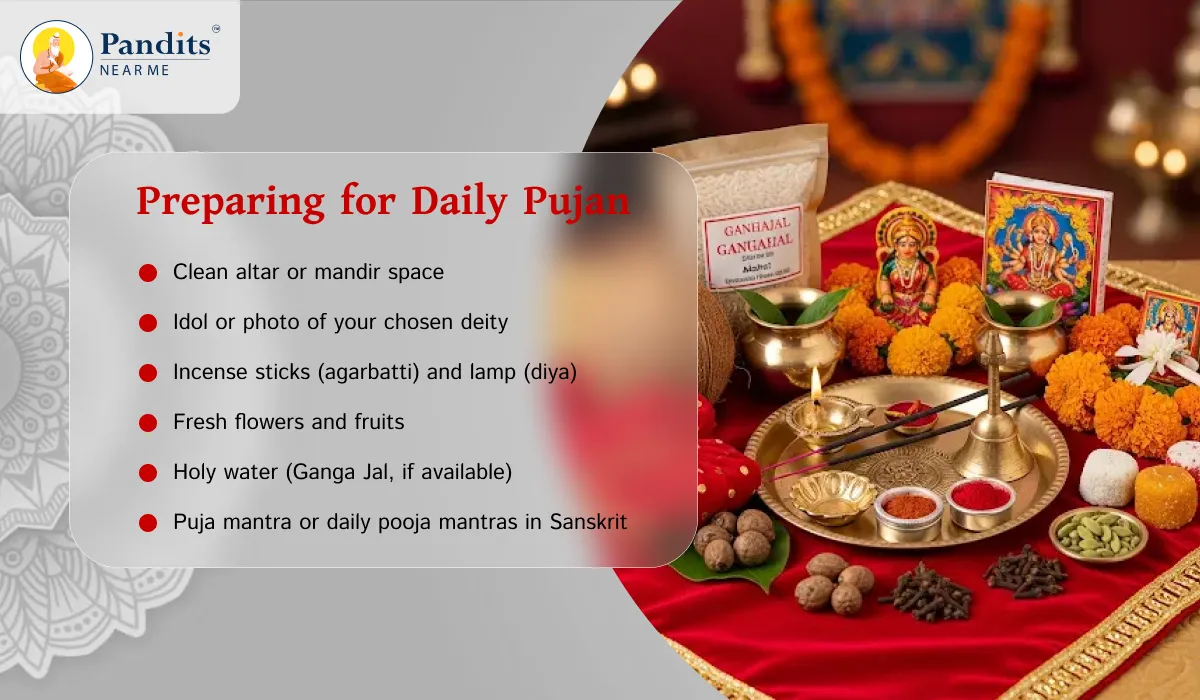
Before beginning the puja vidhi, proper preparation is essential. A clean and peaceful environment reflects the purity of the heart and helps in focusing during prayer. The following essentials are important for home pujan:
Clean altar or mandir space – ensures positivity and purity.
Idol or photo of your chosen deity – such as Lord Ganesha, Goddess Lakshmi, or Lord Shiva.
Incense sticks (agarbatti) and lamp (diya) – to create a divine and spiritual atmosphere.
Fresh flowers and fruits – offered with devotion as symbols of love and gratitude.
Holy water (Ganga Jal, if available) – for purification and sanctity.
A mantra or prayer you know, written down or remembered.
By arranging these essentials beforehand, your daily pujan becomes more disciplined, focused, and spiritually uplifting.
Step-by-Step Samanya Puja Vidhi at Home

Performing a samanya puja vidhi (general worship method) at home daily brings peace, positivity, and divine blessings. Here is a simple method anyone can follow. The order and details vary by family, region and tradition.
1. Clean the Puja Area
Start by cleaning the puja space thoroughly and take a bath. Cleanliness of body and space is the traditional first step.
2. Light the Diya (Lamp)
Light a diya filled with ghee or oil. The lamp is traditionally seen as a symbol of light and of the deity’s presence.
3. Offer Water and Flowers
Place a small offering of clean water before the deity. Offer fresh flowers with devotion.
4. Chant Puja Mantra
Recite a mantra for the deity you worship. Chanting mantras invokes divine blessings and purifies the atmosphere.
For example, while worshipping Lord Ganesha, chant:
“Om Gan Ganapataye Namah”
5. Apply Tilak
Apply sandalwood paste, kumkum, or turmeric to the idol. You can also apply tilak on your own forehead as a mark of devotion.
6. Offer Naivedya (Food)
Place fruits, sweets, or simple homemade food in front of the deity as naivedya (sacred food offering). This offering symbolizes gratitude.
7. Aarti and Mantra Chanting
Perform aarti using a diya while reciting daily pooja mantras in Sanskrit. Ringing a bell during aarti spreads divine vibrations and positivity in the home.
8. Seek Blessings
Finally, fold your hands, bow your head, and pray sincerely for the health, prosperity, and happiness of your family.
This simple samanya puja vidhi takes less than 15 minutes and fills your home with divine energy and peace.
Simple Mantras for Daily Worship
Here are some short mantras many families use in daily worship:
Ganesha Mantra (For removing obstacles)
Om Gan Ganapataye Namah
This mantra is chanted at the beginning of any pujan. Lord Ganesha is known as the remover of obstacles and the giver of success.Gayatri Mantra (For wisdom and peace)
Om Bhur Bhuvah Swaha, Tat Savitur Varenyam
Bhargo Devasya Dheemahi, Dhiyo Yo Nah Prachodayat
The Gayatri mantra is one of the most powerful pooja mantras, believed to enhance concentration, inner peace, and divine wisdom.Maha Mrityunjaya Mantra (For health and protection)
Om Tryambakam Yajamahe Sugandhim Pushtivardhanam
Urvarukamiva Bandhanan Mrityor Mukshiya Maamritat
This mantra is dedicated to Lord Shiva and is especially chanted for good health, protection from negativity, and longevity.Lakshmi Mantra (For wealth and prosperity)
Om Shreem Mahalakshmyai Namah
Devotees chant this mantra to seek Goddess Lakshmi’s blessings for prosperity.
Many families chant one or two of these each day, according to their own tradition.
More Short Sanskrit Mantras
Some families also add these:
Shanti Mantra: Om Saha Navavatu, Saha Nau Bhunaktu, Saha Viryam Karavavahai, Tejasvinavadhitamastu, Ma Vidvishavahai, Om Shanti Shanti Shantihi
Surya Mantra: Om Ghrini Suryaya Namah
Shiva Mantra: Om Namah Shivaya
Durga Mantra: Om Dum Durgaye Namah
Tips for Daily Pujan at Home
To make your daily pooja vidhi more meaningful, it is important to follow some simple practices. Choose a fixed time every day, whether in the morning or evening, and perform your pujan with focus and devotion. Always keep the puja space clean and sacred, as purity enhances the positive vibrations. Use fresh flowers and fruits while offering prayers, and avoid distractions such as mobile phones during the rituals. You can also teach children easy pooja mantras so they feel connected with spirituality and continue the tradition of pujan at home.
Conclusion
Daily pujan is a powerful way to connect with divine energy and bring peace into your life. By following simple puja vidhi and chanting daily pooja mantras, you can make prayer a calm, regular part of your family’s day.
Need guidance or an experienced pandit for rituals? Book trusted pandits anytime with Pandits Near Me, your reliable portal for online pandit booking.
Ans: For samanya puja vidhi, keep a diya, incense, flowers, rice, water, fruits, and chant a poojan mantra. These essentials are enough for daily puja at home.